I feel my group really worked hard to incorporate as many offers from the site into our piece and development as possible. One of the strongest aspects of our performance was that I truly feel we managed to incorporate the site's physicality well and creatively into the shape and the concept of our piece. This was definitely one of our successes as we were able to use our site directly to tell and create the story and that we wouldn't have been able to perform it with as much effect in a different location. By researching different aspects of our piece, we were able to develop the authenticity of the piece and intertwine that with offers made from the site. One of our strengths was the fact we actually used an elderly person to record the sound and tell the story, this helped us create a realistic world that the audience would travel through and take part in, we felt as a group that our story's impact would've fallen flat if we had used our natural voices in the place of an old women rather than the real thing.
One of our most obvious weakness was our use of sound. We were planning on using a portable speaker that Andrea would carry whilst travelling up the stairs however, despite testing it on multiple occasions, it did not work on the day of the performance. This meant that we had to use the big theatre speaker that was extremely quiet and was not loud enough to have the desired effect. This had an extremely large impact on our story telling and I feel that this aspect fell quite flat, meaning we lost a large amount of the effect and impact we wanted to have on the audience. We had developed our piece to work in tandem with the sound and so without the sound working properly, I feel it was a lot harder to follow the story, especially as we as actors remained completely silent till the end. Although our piece could have worked without sound, I don't feel it was completely clear or distinct, therefore again, losing a lot of the effect.
If I had the chance I would have really liked to have developed the use of physical theatre further and in greater detail as that was a large part of our original plan. I feel our piece could have been more entertaining if we had really indulged into using physical theatre at each level rather than mime like actions, however, we still managed to tell the story through the actions we chose but I wish we had been slightly more experimental in the way we performed and told the story. I personally feel it would've been interesting as an actor to explore different solo pieces that help tell different parts of a story which all come together and reveal itself at the end, I hope to explore this further in future acting projects that allow me to be as experimental as I possibly can.
My role in our piece, Brenda as a young adult, was supposed to show how the death of her brother hand followed her to the next stage of her life. This was also aided by Chloe and Tia following up in onto my level, physically portraying the death of the brother on the stairs beforehand. I feel we were able to show the progression of the story effectively through the use of the headscarf that we each wore on our levels to show that it was the same character growing up as well as the physical progression of the audience up the stairs. We chose to use the same piece of item of clothing to distinctly show that they were the same character, this meant that it was clearer to define the fact that her past followed her wherever she went as the passing of the scarf happened at every single stage. Without that distinct piece of clothing and the action of each Brenda passing it to the other, I feel the effect of the piece would've definitely been lost through the distraction of travelling through the space and so I am extremely grateful we were able to use it to our advantage. We successfully presented both the literal progression through the story, through the audience's journey, as well as the figurative - through our actions and the headscarf.
Overall, I really liked how the piece turned out. Though I feel it definitely could have been improved and I don't feel we were extremely expressive enough with our choices, I feel we were successful in the decisions that we did make and were able to carry them out effectively - especially with our dampened down sound. We were able to truthfully incorporate our site into our piece to make a really honest piece of site specific theatre that would definitely had not been as effective if performed in a different location.
Friday, 20 February 2015

Wednesday, 18 February 2015
Jasper's Group Performance
Jasper's group performance took place in the hut. We were instantly transported into their world by directly being addressed by Jasper as if we were students before we even entered the site. This gave me an initial idea about what their piece would entail before it even properly started. The site was dressed as a school class room set in the 1914. Though this was done in quite a minimalist way, through the modern plastic chairs and a white board, I feel it was carried effectively as it allowed us to completely imagine the setting and create the world yourself rather than it being created for us. These were definitely two of the stronger aspects of their piece that helped immerse the audience into a 1914 classroom, however I feel the genuine aspects of the site that were specific for that area were lost.
Personally, I don't think the distinction between the modern day classroom and the 1914 classroom was made clear enough or explored in enough detail for it to leave a large impact, however, I did like the idea they were trying to explore and feel it was an interesting story to tell. The parallels made between the two classrooms helped us as theatre viewers, travel through time from 1914 to modern day - something we definitely can't achieve in general life, staying true to the experimental term. They mixed audience interaction with music. facts and theatrics that helped create an experimental and interesting experience to take part in.
I feel Jasper held the most prominence in the piece; though this may only be due to the fact I did not see any of the other cast members or that I couldn't decipher them from audience members - and that his bold and brave choices held the piece together. He was extremely believable as a 1914 teacher and helped carry the illusion successfully along for the audience - however, it would've been nice to see the other members clearly.
Overall, I generally enjoyed the piece. Though I feel they could have definitely explored more specific aspects of the site to incorporate into their story to make it a little bit more unique to the area, I found the concept they were trying to display interesting as an audience member as well as conjuring up interesting questions to think about in regards to our school environments and the social values from the different time periods.
Personally, I don't think the distinction between the modern day classroom and the 1914 classroom was made clear enough or explored in enough detail for it to leave a large impact, however, I did like the idea they were trying to explore and feel it was an interesting story to tell. The parallels made between the two classrooms helped us as theatre viewers, travel through time from 1914 to modern day - something we definitely can't achieve in general life, staying true to the experimental term. They mixed audience interaction with music. facts and theatrics that helped create an experimental and interesting experience to take part in.
I feel Jasper held the most prominence in the piece; though this may only be due to the fact I did not see any of the other cast members or that I couldn't decipher them from audience members - and that his bold and brave choices held the piece together. He was extremely believable as a 1914 teacher and helped carry the illusion successfully along for the audience - however, it would've been nice to see the other members clearly.
Overall, I generally enjoyed the piece. Though I feel they could have definitely explored more specific aspects of the site to incorporate into their story to make it a little bit more unique to the area, I found the concept they were trying to display interesting as an audience member as well as conjuring up interesting questions to think about in regards to our school environments and the social values from the different time periods.
Tuesday, 17 February 2015
"A terrible guilt, associated with an accident in which your brother died, is something you would carry with you for the rest of your life."
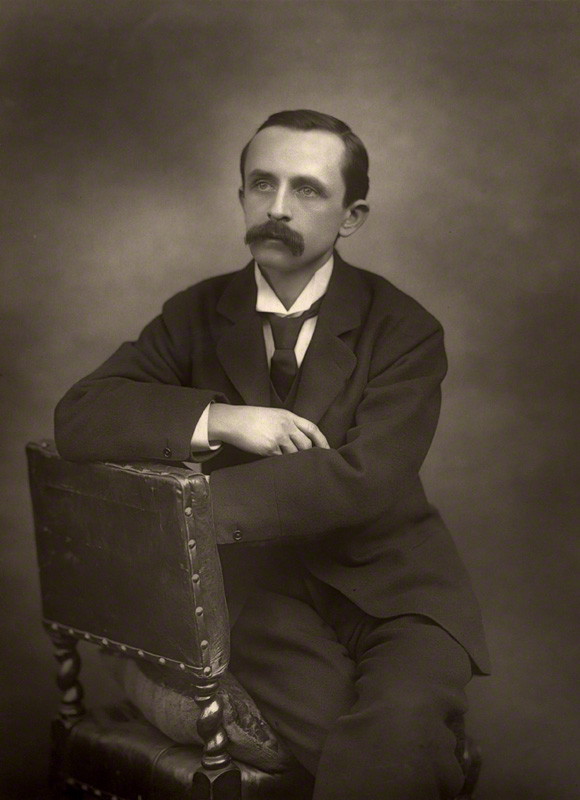 Though JM Barrie and Peter Pan haven't got loads to do with our peice, JM Barrie does have a direct link to our main character, Brenda. When JM Barrie was 6 years old, his brother David - 13 years old and his mother's favourite, fell and hit his head whilst ice skating. He died from the injury the day before his 14th birthday. JM Barrie tried to fill David's place in his mother's life - going to the extent of wearing his clothes and copying his mannerisms.
This is a direct link to Brenda as both of them have lost siblings they were close to and feel a certain need to obsess over their death, Barrie - with trying to fill the void left by him and Brenda - with the guilt from the part she played in her brother's death.
Barrie's mother found comfort in the fact that her dead son would remain young forever - much like Barrie's well known and loved character Peter Pan. This idea is also explored in our piece as it's about how despite the death of her brother, his memories and his impact still follows her throughout her life and her development. Her brother remains young forever, like Barrie's brother and Peter. There is also theory in that JM Barrie was there the day his brother died and was incidentally the "friend" that caused the death of his brother. This links directly to the guilt Brenda feels over her brother's death and her part in her brothers death and how that lives with her for the rest of her life. Some may argue that Barrie wrote aspects in about his brother's death into Peter Pan - much like how Brenda writes a book on her experience.
Though we aren't necessarily using this as a stimulus, it is useful to help bring context and reality to our piece - situations like this really could happen. If we had more time for development, I feel it would've been interesting to have incorporated this further and have developed on the real life link between our story and JM Barrie's, perhaps incorporating aspects of his work into ours.
Though we aren't necessarily using this as a stimulus, it is useful to help bring context and reality to our piece - situations like this really could happen. If we had more time for development, I feel it would've been interesting to have incorporated this further and have developed on the real life link between our story and JM Barrie's, perhaps incorporating aspects of his work into ours.
http://en.wikipedia.org/wiki/J._M._Barrie
http://www.heraldscotland.com/tragedy-behind-neverland-did-jm-barrie-cause-brother-s-death-1.884307
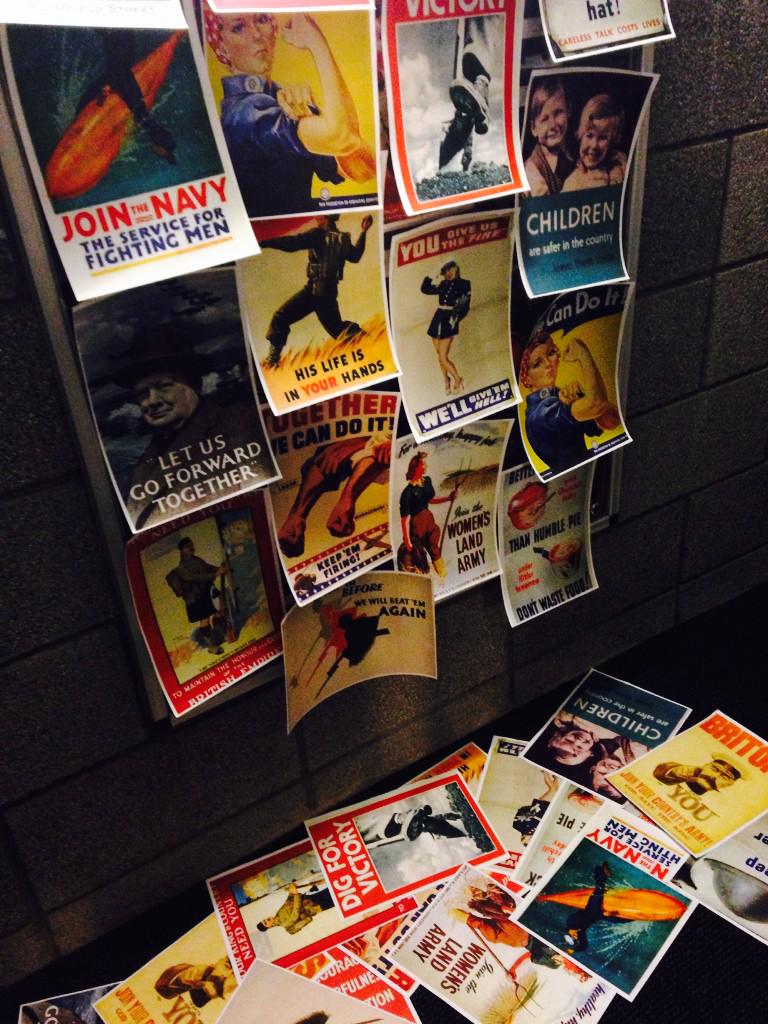 We also incorporated the pattern of the brickwork into our scenery and decoration. By using A4 sheets of rectangular paper, we tried to re-create the systematic pattern and formation of the brick wall. Not only was this an interesting way to incorporate different offers from the site into our piece's decoration and set, but also it help create the world we were trying to develop and the story we were trying to tell.
We decided to have a simple way of showing the different scenes and time frames by covering up the board on each level with something significant to the time. For example, at the first stage - when she's at her youngest, we had children's drawings and paintings stuck all over the walls. Then, on the second level, we had different posters from the Second World War to help introduce the aspect of war into the piece and incorporate the time period. On the third level, I then decorated different pieces of plain paper with different phrases like "missing in action" "my fault" and "guilty" to completely underline the development of her emotions and her emotional state at that level due to the previous events.
Monday, 16 February 2015
Brickwork
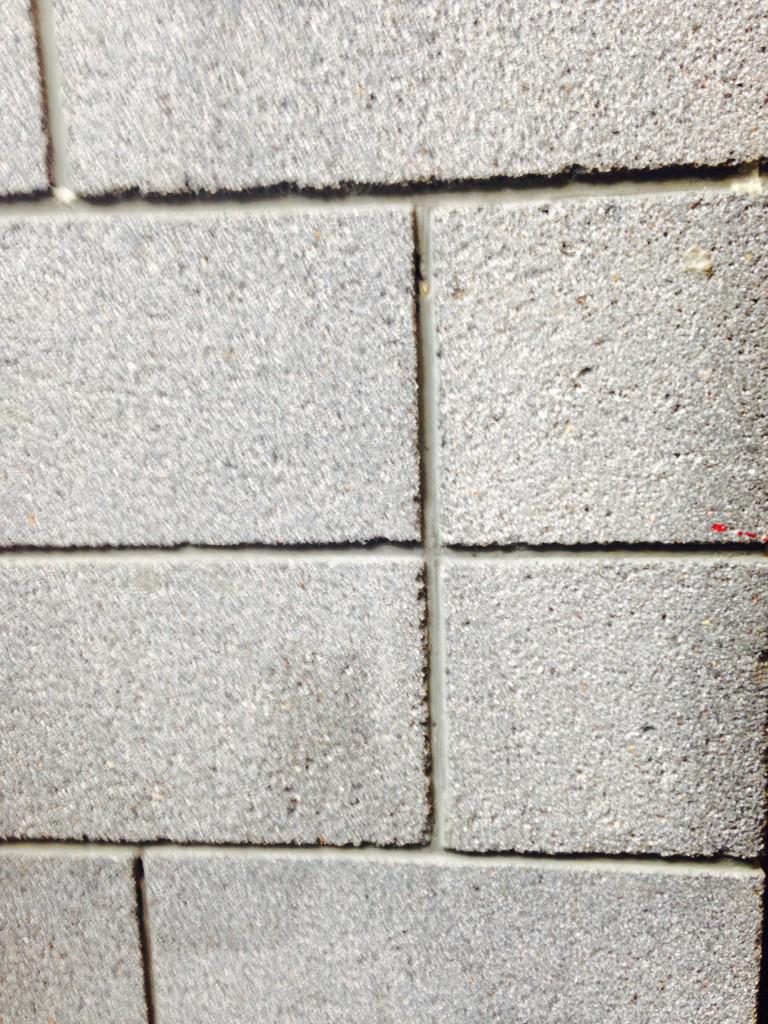 We used the straight lines made by the brickwork in our site as the starting developing point for our transition moments. For example, we began to think about how we could incorporate our story with the lines given from the site and decided to link it to lines in the formation of the army. This directly links into our story's exploration of World War 2 and helped create a transition to each level that was relevant and developed from the site itself.
 To incorporate this, we got Andrea and Chloe to move in parallel straight lines up the stairs as if they were in the army - this was to echo the line work in the brick formation. The hardness and density of the brickwork was also incorporated as they were extremely firm, distinct and hard hitting in their movements against the metal staircases - an attempt to conjure up the feelings given from the colours and decoration of the bricks.
Not only do I feel was this a creative way to introduce the war aspect into the piece, but it also allowed us to incorporate the different offers made from the site in an interesting way. However, I would have liked to have explored it further in greater detail to make the link between the site and the transition more distinct as I didn't feel that was extremely clear to the audience and may have been lost.
Wednesday, 4 February 2015
Outline
Ground floor:
Present day, Brenda's book launch.
First platform:
Brenda as a child, around age 3/4, about the year 1928. This is the introduction of her brother into her life and the story. This establishes the relationship between herself and her brother, instantly planting the seed of their relationship right at the beginning of the story. This is also the beginning of the story unraveling itself.
Transition:
Before the audience walk up the stairs, Chloe and Andrea stomp up as if they were in the army and then stomp back down. This is to introduce the aspect of war into the piece - it also incorporates the straight lines created on the wall by the formation of the bricks.
Second platform:
Brenda as a teenager, around 15/16, about the year 1940. The story is followed up onto the next level, as the audience move upwards, more is revealed. This is the introduction pf the issue introduced into the story - the whole point of Brenda telling her tale. She urges her brother to go to war as she believes it was the right thing to do to make her country. This is inevitably what sticks to her and haunts her throughout her life.
Transition:
Paralleling what Chloe and Andrea carried out previously, Chloe and Tia now walk up the stairs as if they were members of the army but then get shot halfway there. This is to show that the brother dies during the war - they then jump up and sporadically keep repeating "brother?, have you seen my brother?", this is to begin to show her pain.
Third platform:
Brenda as an adult, around 30, about the 1955. She is obsessively writing letters to her brother as she can not seem to get over the guilt from the events previously. Her pain is too great. This is to show how the events from the previous stage have followed her through her life.
Transition:
Each stage of Brenda sitting on the stairs, writing. This is to show the aspect of writing the story that all leads to the next stage. One by one, youngest to oldest, they have to use the bar to pull themselves up the stairs, to show how much effort she has to put in to grow - this is incorporating the site's offers into our piece.
Fourth & Final platform:
Brenda age 90. She's finally come to piece with the part she played in her brother's death by recording it down and telling her story, she's finally in a place to be able to talk to people about it and share it with the world.
Present day, Brenda's book launch.
First platform:
Brenda as a child, around age 3/4, about the year 1928. This is the introduction of her brother into her life and the story. This establishes the relationship between herself and her brother, instantly planting the seed of their relationship right at the beginning of the story. This is also the beginning of the story unraveling itself.
Transition:
Before the audience walk up the stairs, Chloe and Andrea stomp up as if they were in the army and then stomp back down. This is to introduce the aspect of war into the piece - it also incorporates the straight lines created on the wall by the formation of the bricks.
Second platform:
Brenda as a teenager, around 15/16, about the year 1940. The story is followed up onto the next level, as the audience move upwards, more is revealed. This is the introduction pf the issue introduced into the story - the whole point of Brenda telling her tale. She urges her brother to go to war as she believes it was the right thing to do to make her country. This is inevitably what sticks to her and haunts her throughout her life.
Transition:
Paralleling what Chloe and Andrea carried out previously, Chloe and Tia now walk up the stairs as if they were members of the army but then get shot halfway there. This is to show that the brother dies during the war - they then jump up and sporadically keep repeating "brother?, have you seen my brother?", this is to begin to show her pain.
Third platform:
Brenda as an adult, around 30, about the 1955. She is obsessively writing letters to her brother as she can not seem to get over the guilt from the events previously. Her pain is too great. This is to show how the events from the previous stage have followed her through her life.
Transition:
Each stage of Brenda sitting on the stairs, writing. This is to show the aspect of writing the story that all leads to the next stage. One by one, youngest to oldest, they have to use the bar to pull themselves up the stairs, to show how much effort she has to put in to grow - this is incorporating the site's offers into our piece.
Fourth & Final platform:
Brenda age 90. She's finally come to piece with the part she played in her brother's death by recording it down and telling her story, she's finally in a place to be able to talk to people about it and share it with the world.
Friday, 30 January 2015
Changes and Discoveries Made in 28/01/15's Rehearsal
We began by running the basic outline of our piece using the voice recording to see where we could start making developments. As we spent a while focused one the first scene, where Chloe is playing our main character as a child, we made a couple developments that we came across whilst devising from what we had previously created. For example, instead of simply having Chloe drawing simplistic drawings on the white paper, we've decided that she will be painting to place emphasis on the character's age at that stage. Also, we wanted to have a larger interaction with the audience so we're going to have Chloe run around and through the audience.
To symbolise the memories following the main character throughout her life, we developed it so that Chloe follows the audience up to the next level where Tia carries our her scene as the teenage stage of the main character's life. Then, both her and Tia take the place of her middle aged self as she is putting up the posters from WW2. Also, after listening to the voice over - we decided to also have pieces of music that signify each age of our main character at each level: eg; a children's nursery rhyme after the first level. This will not only help ease the transitions up the levels for the audience, but also establish the ages and time frame each level represents.
We also developed, that when it gets to my level - I'm playing her as a middle aged woman, that both Chloe and Tia follow up and join me and as I scrunch up the letters after writing them, they start to unravel them and stick them to the wall. This is to represent how constant the reminder of her brother is in her life and how she would never be able to let him and her actions go.
To symbolise the memories following the main character throughout her life, we developed it so that Chloe follows the audience up to the next level where Tia carries our her scene as the teenage stage of the main character's life. Then, both her and Tia take the place of her middle aged self as she is putting up the posters from WW2. Also, after listening to the voice over - we decided to also have pieces of music that signify each age of our main character at each level: eg; a children's nursery rhyme after the first level. This will not only help ease the transitions up the levels for the audience, but also establish the ages and time frame each level represents.
We also developed, that when it gets to my level - I'm playing her as a middle aged woman, that both Chloe and Tia follow up and join me and as I scrunch up the letters after writing them, they start to unravel them and stick them to the wall. This is to represent how constant the reminder of her brother is in her life and how she would never be able to let him and her actions go.
Subscribe to:
Comments (Atom)